
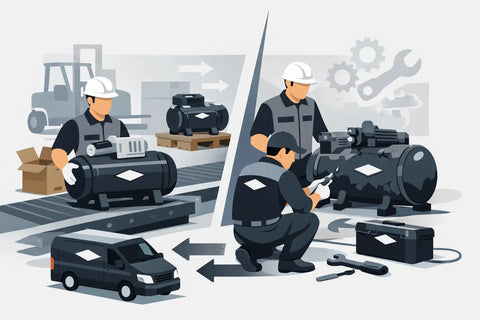
A compressor that trips during a production run is more than a maintenance issue. It can stop packaging lines, disrupt process controls, compromise air quality, and force costly overtime. Knowing when a compressor should be replaced rather than repaired helps operations teams control that risk before a breakdown makes the decision for them.
The right answer is rarely based on age alone. A well-maintained industrial compressor may run reliably for many years, while a newer unit that is undersized, poorly installed, or operating in harsh conditions can become an expensive liability quickly. The decision should come from the condition of the machine, the cost of keeping it online, and whether it still meets the facility's actual air demand.
When Should a Compressor Be Replaced?
Replacement becomes the practical choice when repair costs, energy waste, capacity limits, or downtime exposure outweigh the cost of a new system. A certified technician should inspect the compressor and the supporting system before making that call. The apparent compressor problem may originate with inadequate ventilation, incorrect piping, a saturated dryer, pressure drop, controls, or excessive system leaks.
That said, several warning signs consistently point toward replacement planning rather than another short-term repair.
Major repairs are becoming routine
One failed component does not mean a compressor is finished. Bearings, valves, belts, hoses, starters, filters, and sensors are normal service items. But repeated failures, especially involving the air end, motor, drive assembly, or electrical controls, change the economics.
If the compressor has needed multiple significant repairs in a short period, look beyond the invoice for each individual event. Add the cost of emergency labor, rental equipment, lost production, expedited parts, and the time your maintenance team spends responding. A machine that is technically repairable can still be the wrong asset to keep.
An air end rebuild can be a sensible investment when the unit is otherwise well matched to the application and the repair restores dependable operation. It is less attractive when the compressor also has obsolete controls, high operating hours, declining efficiency, or a history of unplanned shutdowns.
Your energy use has climbed without a production increase
Compressed air is a costly utility. When a compressor consumes more power to deliver the same output, the operating penalty can exceed the payment on a replacement unit.
Watch for longer loaded run times, unstable pressure, excessive load/unload cycling, high discharge temperatures, or a noticeable rise in utility consumption without a corresponding production change. In rotary screw systems, worn components and poor control performance can steadily reduce efficiency. In reciprocating systems, leakage, valve wear, and heat-related issues can have the same effect.
Before replacing equipment solely for high energy use, verify the system condition. Leaks, inappropriate pressure settings, undersized piping, and unattended demand spikes may be driving the cost. Once those issues are measured, a properly sized fixed-speed or variable-speed compressor can often deliver a much better operating profile than the existing machine.
The compressor no longer supports demand
Plants change. A compressor selected for one shift, one production line, or one building may not be able to support expanded operations, new automation, additional tools, or higher-quality air requirements.
A unit that runs at full load for extended periods may have no reserve capacity for peak demand or maintenance events. Pressure drops at the far end of the plant, equipment faults during simultaneous operation, and operators raising the pressure setpoint to compensate are common signs that the system is no longer sized correctly.
Oversizing is also a problem. A large compressor serving a light and variable load may cycle excessively, waste power, and experience unnecessary wear. Replacement is an opportunity to match compressor capacity, controls, storage, dryers, filters, and piping to the demand profile you have now, not the one you had years ago.
Air quality problems keep returning
Oil carryover, moisture in production air, contamination at point of use, and excessive condensate are not always compressor failures. They can indicate issues with filtration, dryers, drains, separators, or maintenance practices. Still, recurring air quality problems may signal that the compressor and treatment equipment are no longer suitable for the application.
This matters most for food and beverage operations, healthcare facilities, electronics, painting, pharmaceutical processes, and any application where contamination can create scrap, safety concerns, or compliance exposure. If an aging oil-flooded compressor is repeatedly contributing to downstream issues, an oil-free solution or a redesigned treatment train may be the better long-term investment.
Parts and controls are becoming difficult to support
Obsolete controllers, discontinued electrical components, unavailable air end parts, and long lead times all increase downtime risk. A compressor can appear serviceable until a minor failure requires a component that cannot be sourced quickly.
Ask a service provider whether critical repair parts remain readily available and whether the controls can be supported. If every repair now requires special sourcing or a workaround, replacement planning should begin before the next failure. This is particularly important for facilities with one primary compressor and no dependable backup.
Reliability has become an operations problem
Maintenance records tell a clearer story than memory. Review unplanned outages, alarm history, repair frequency, pressure complaints, and the number of times production has had to wait for air.
For a noncritical shop compressor, occasional repairs may be acceptable. For a hospital, municipal facility, defense operation, or high-volume manufacturing plant, the tolerance for failure is much lower. The replacement decision should reflect the cost of interruption, not just the price of the equipment.
A backup compressor, rental plan, or temporary air connection can reduce exposure while a new system is selected and installed. These options are especially valuable when an existing unit is operating on borrowed time but production cannot pause for a replacement project.
Compare Repair Cost to Total Cost of Ownership
A common rule of thumb is to consider replacement when a major repair approaches a substantial portion of the cost of a comparable new compressor. That rule is useful, but it is incomplete. A lower repair quote can still be expensive if it only buys a few months of unreliable service.
Compare the repair option against the full cost of continued operation: projected power use, planned maintenance, expected repairs, downtime exposure, parts availability, and the machine's ability to meet future demand. Then compare those costs with a replacement system over several years.
A new compressor may also provide advantages that do not show up on a repair invoice. Modern controls can improve sequencing in multi-compressor installations. Variable-speed technology can reduce waste in applications with fluctuating demand. Better heat management, monitoring, air treatment integration, and properly designed piping can improve the performance of the entire compressed air system.
The opposite can be true as well. Replacing a machine before diagnosing the system can lead to an expensive, oversized installation that does not solve pressure or air-quality issues. The goal is not to buy new equipment unnecessarily. The goal is to make a decision based on measured operating conditions.
What a Replacement Evaluation Should Include
Before approving a major repair or purchasing a new unit, collect operating data. Run hours, loaded hours, pressure trends, power consumption, temperature readings, maintenance history, air quality requirements, and peak-demand behavior should all be part of the review.
A qualified assessment should also evaluate storage capacity, dryer performance, filtration, drains, ventilation, piping restrictions, and leaks. These components directly affect compressor performance. Installing an efficient new compressor into a leaking, high-pressure system leaves much of the savings on the table.
For facilities with multiple compressors, sequencing is equally important. A new machine may work best as a trim unit, base-load unit, or backup depending on the load profile. The right configuration can improve uptime without requiring every compressor to be replaced at once.
Plan the Change Before Failure Forces It
Replacement does not have to mean an abrupt shutdown. With an assessment and installation plan, facilities can schedule the work around production requirements, arrange temporary air if needed, and commission the new system without exposing operations to unnecessary risk.
Advanced Air & Vacuum can help evaluate multi-brand equipment, identify whether repair remains viable, and design a replacement system around your required pressure, flow, air quality, and redundancy needs. The objective is straightforward: reliable air at the lowest practical operating cost.
Before authorizing the next major repair, ask for the operating data behind the recommendation. A clear comparison between repair, replacement, and system improvements gives your team the information needed to protect uptime and make the capital decision with confidence.
