
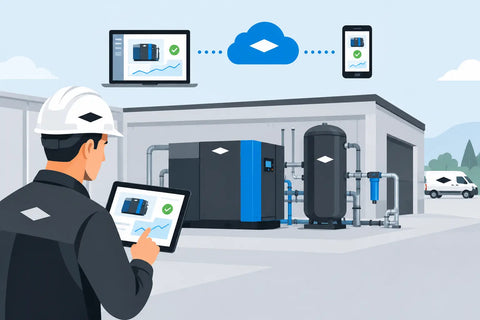
A compressor can sound normal, hold pressure, and still be costing a facility thousands in wasted energy or avoidable wear. Remote monitoring gives maintenance and operations teams a way to see what the system is doing between walkthroughs, before a minor change becomes a production-stopping failure.
For compressed air and vacuum systems, the value is not simply having more data. The value is receiving useful information early enough to make a planned service decision instead of an emergency repair decision. That difference affects labor scheduling, parts availability, energy use, product quality, and uptime.
What Remote Monitoring Tracks in an Industrial Air System
Remote monitoring uses connected controls, sensors, and secure communications to collect operating data from compressors, dryers, vacuum pumps, and related equipment. Depending on the equipment and monitoring platform, a team may see live status, historical trends, alarms, maintenance intervals, and performance data from an onsite display or remote device.
The most useful measurements are tied to operating decisions. Pressure shows whether the system is delivering what production needs. Run hours and loaded versus unloaded time indicate how hard a compressor is working. Temperature, dew point, differential pressure, flow, power consumption, and fault history provide additional context when equipment performance changes.
A single alarm is not always a crisis. High discharge temperature on a hot afternoon may call for an inspection of ventilation and cooling conditions, while the same alarm combined with repeated trips can point to a more urgent issue. Remote visibility helps a qualified technician see the pattern instead of treating every warning as an isolated event.
Data That Should Lead to Action
The right monitoring setup focuses on measurements that support a clear response. For most industrial facilities, these include:
- Pressure trends at the compressor and critical points of use
- Compressor run time, load profile, starts, stops, and fault codes
- Dryer dew point and filter differential pressure
- Temperature readings that may signal cooling or lubrication issues
- Energy consumption and demand patterns over time
Why Remote Monitoring Matters for Uptime
Compressed air is often called the fourth utility because production depends on it as consistently as it depends on power or water. Yet many air systems receive attention only after pressure drops, water reaches the line, or a compressor trips. By then, the facility is managing consequences.
Remote monitoring changes the maintenance posture from reactive to planned. If operating temperature begins trending upward, service can be scheduled before a shutdown occurs. If a compressor is running unloaded for extended periods, the team can investigate controls, storage, demand fluctuations, or air leaks. If a dryer alarm occurs overnight, the right people can be notified before the next shift begins.
This matters especially for facilities with lean maintenance staffing, multiple buildings, or equipment located away from the main production floor. Plant managers cannot stand beside every compressor, dryer, and vacuum pump. Monitoring extends visibility without replacing the need for onsite inspections and certified service.
It also creates a better record for troubleshooting. When a production area reports low pressure, historical data can show whether the source is compressor capacity, a sudden demand event, a clogged filter, a pressure-setting issue, or a distribution-system restriction. That shortens diagnosis and reduces the risk of replacing parts based on guesswork.
Energy Waste Often Appears First in the Trend Data
A system can be reliable enough to keep production running while still operating inefficiently. Remote data often exposes that costly middle ground.
Excessive system pressure is a common example. Facilities sometimes raise pressure to compensate for pressure drops, undersized piping, failing filters, or peak demand. The compressor then consumes more energy across the entire system, even though the actual issue may be isolated to one area. Monitoring pressure at several points can identify where the loss occurs and support a targeted fix.
Load and unload patterns are equally revealing. A fixed-speed compressor that repeatedly cycles or runs unloaded for long periods may indicate that storage and controls are not matched to demand. In other cases, the facility may have added equipment or shifts without reassessing compressor capacity. The answer could involve controls, storage, leak repair, equipment sequencing, or a properly sized variable-speed machine. It depends on the demand profile, not just the compressor nameplate.
Energy data is most valuable when paired with production context. A higher kW reading during a documented production increase may be expected. Higher energy use when production is flat deserves investigation. This is where monitoring helps teams separate normal operating changes from waste that has become routine.
How to Build a Monitoring Plan That Works
The best remote monitoring program starts with the facility's operational priorities. A hospital may prioritize air quality and alarm response. A manufacturer may focus on pressure stability and avoiding line stoppages. A municipal operation may need reliable visibility across remote sites. The monitoring strategy should reflect what failure or poor performance costs that specific operation.
Start With the Equipment That Creates the Greatest Risk
Begin with the compressor, dryer, vacuum pump, or treatment equipment whose failure would have the greatest production, safety, or compliance impact. Monitoring every asset immediately is not always necessary. A phased approach can deliver value sooner while allowing the team to establish alarm procedures and review the first round of trend data.
Confirm what controls and communications capabilities already exist. Some modern machines support integrated connectivity, while older equipment may need added sensors or control upgrades. Multi-brand systems may require a tailored approach, particularly when compressors, dryers, and filtration equipment were installed at different times.
Set Alarms Around Priorities, Not Every Variation
Too many alerts create alert fatigue. If every routine fluctuation sends a notification, the people responsible will eventually stop responding with urgency. Alarm thresholds should be based on manufacturer recommendations, actual operating conditions, and the facility's tolerance for risk.
A useful alarm plan identifies who receives the alert, what they are expected to check, when they should call for service, and what information should be recorded. Critical alarms may require immediate escalation. Advisory alarms may trigger inspection during the next scheduled maintenance window. The response process should be as clear as the dashboard.
Pair Monitoring With Preventive Maintenance
Remote monitoring does not eliminate maintenance. It makes maintenance more informed. Filters still need replacement, lubricants still need analysis or changes, drains still need inspection, and heat exchangers still need cleaning. The difference is that service intervals can be supported by real operating conditions rather than calendar assumptions alone.
At Advanced Air & Vacuum, certified technicians can connect monitoring findings to the practical work that keeps systems operating: inspecting equipment, correcting performance issues, sourcing parts, and planning service around production requirements. The strongest result comes from combining data with people who understand the entire compressed air system.
Common Mistakes to Avoid
Treating remote monitoring as a standalone software purchase is the most common mistake. The platform is only as useful as the equipment data, alarm logic, network setup, and service response behind it. Before installation, establish who owns the data review process and who can act on findings.
Another mistake is monitoring the compressor while overlooking the air treatment and distribution system. A compressor may be healthy while a saturated filter, failed drain, dryer problem, or piping restriction compromises the air delivered to production. System-level visibility provides a more accurate picture.
Finally, do not assume every inefficiency can be solved remotely. Trend data can identify where to look, but leaks must be found, piping must be evaluated, and equipment still requires qualified hands-on inspection. Remote access speeds the decision. It does not replace sound field service.
Turn Operating Data Into Planned Decisions
The most productive next step is to review where your facility has the least visibility and the highest consequence of failure. That may be a primary compressor running after hours, a dryer protecting a sensitive process, or a vacuum pump serving a critical production line.
A well-designed remote monitoring plan gives your team time to respond before downtime and waste take control of the schedule. When the data identifies a change, use it to plan the right inspection, repair, or system improvement while production is still protected.
