
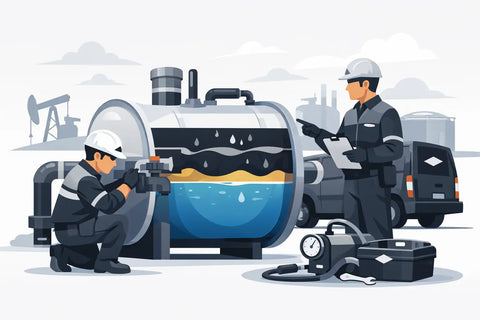
A separator usually gets attention only after something goes wrong - oily discharge, failed inspections, saturated media, or a disposal bill that suddenly looks too high. In most facilities, oil water separator maintenance is easy to delay because the unit sits in the background. But when condensate treatment slips, the consequences move quickly from housekeeping problem to compliance risk, unnecessary cost, and avoidable downtime.
For plants running compressed air around the clock, this is not a minor support task. The separator is part of the system’s reliability chain. If it is undersized, neglected, or serviced too late, the problem does not stay isolated at the drain point. It affects waste handling, environmental control, and maintenance labor. In some cases, it also points to larger issues upstream with drains, filters, or compressor condition.
Why oil water separator maintenance matters more than it seems
Compressed air systems generate condensate as a normal byproduct. That condensate often contains oil carryover and other contaminants that cannot simply be sent downstream without treatment. The separator’s job is straightforward: split oil from water so the waste stream can be handled correctly. The work is simple in principle, but the real-world performance depends on regular service and correct operating conditions.
When maintenance is missed, separation efficiency drops. Media can become overloaded. Internal chambers can foul. Automatic drains can fail or feed the unit inconsistently. The result may be visible oil in the discharge, but not always. Some separators lose performance gradually, which is why plants can drift out of compliance without an obvious alarm.
That slow decline is what makes maintenance so valuable. A planned service event costs far less than emergency cleanup, regulatory exposure, or the labor involved in chasing a condensate problem across multiple drains and collection points.
What proper oil water separator maintenance actually includes
Maintenance is not just changing a filter cartridge on a calendar and walking away. A dependable service approach starts with the separator itself, but it also checks the operating conditions around it.
At the unit level, technicians should inspect the vessel, internal stages, and serviceable media. They should verify that flow paths are clear, that there is no sludge buildup reducing retention time, and that any visible signs of oil bypass are addressed. If the separator uses adsorption media, that media needs replacement before it reaches exhaustion, not after discharge quality has already degraded.
Upstream, the condensate source matters. Failed zero-loss drains, stuck drain valves, emulsified condensate, and excessive compressor oil carryover can all reduce separator performance. In other words, if the separator keeps failing early, the separator may not be the root cause.
Disposal is part of maintenance too. Spent media, collected oil, and contaminated debris need to be handled according to site requirements and local regulations. That sounds basic, but it is often where rushed maintenance creates risk. The separator is not truly serviced until the waste side is managed correctly.
Common signs your separator needs service now
Some facilities wait for the scheduled interval. Others need to act sooner because operating conditions changed. A separator that handled one compressor load may struggle after a production expansion or a different lubricant is introduced.
The most common warning signs are oily sheen in discharge water, strong odor near the condensate treatment area, faster-than-normal media saturation, backed-up condensate lines, and repeated drain issues. A rise in disposal costs can also be a clue. If too much oil is getting into the water side, the system is not doing its job efficiently.
There are also less obvious signs. If compressor oil consumption increases, if downstream filters are seeing unusual loading, or if multiple drains across the plant start behaving inconsistently, it makes sense to inspect the separator as part of a larger system review. Condensate treatment problems are often connected to broader compressed air maintenance issues.
The biggest maintenance mistake: treating every separator the same
Not all separators have the same service needs. Maintenance intervals depend on compressor size, run hours, lubricant type, ambient conditions, condensate volume, and how well the drains upstream are performing. A lightly loaded system in a clean environment may go much longer between service events than a high-demand plant with multiple oil-flooded compressors running every shift.
This is where generic maintenance schedules create trouble. If the interval is too long, performance drops before anyone notices. If it is too short, you spend more than necessary on media, labor, and shutdown coordination. The right approach is condition-based planning backed by actual system knowledge.
For operations teams, that means looking at the separator as part of the compressed air package, not as a standalone accessory. A reliable service provider will ask what compressors are installed, what lubricant is used, how drains are configured, what the duty cycle looks like, and whether the site has had recent condensate issues. Those details change the maintenance plan.
How upstream problems shorten separator life
A separator that plugs early or stops separating efficiently is often reacting to conditions upstream. Excessive oil carryover from the compressor can overwhelm the unit. Malfunctioning drains can dump slugs of condensate instead of controlled flow. Emulsions can form when lubricant, heat, and contaminants combine in ways the separator was not designed to handle easily.
That is why replacing media without investigating root cause can become an expensive loop. You restore performance for a short time, then the same issue returns. The better fix may involve servicing drains, reviewing compressor condition, checking aftercoolers and filters, or confirming that the separator is correctly sized for the actual load.
In facilities with multiple compressors, the challenge gets bigger. Different machine types, operating schedules, and lubricant formulations can create a mixed condensate stream that behaves differently than expected. In those cases, maintenance needs a system view, not a single-point repair mindset.
Preventive service vs. emergency response
Emergency separator service usually happens at the worst possible time - when production is busy, environmental concerns are urgent, and internal teams are already stretched. Preventive maintenance changes that equation. It gives you control over scheduling, parts availability, labor, and waste handling.
There is also a cost control advantage. Planned service helps avoid premature replacement of separator components and reduces the chance that small drain failures turn into larger cleanup events. For maintenance supervisors and plant managers, that matters because condensate treatment problems rarely stay cheap once they become visible.
For multi-site operators or facilities with strict uptime requirements, documented maintenance also supports consistency. It helps teams track service intervals, media usage, recurring issues, and whether the separator is still the right fit for current production demand.
When to bring in certified technicians
Basic visual checks can be handled in-house if your team knows what normal performance looks like. But when there is discharge quality concern, unexplained saturation, repeated drain trouble, or uncertainty about sizing, it makes sense to bring in certified technicians who work on compressed air systems every day.
That outside support is especially valuable when the separator issue may not actually be a separator issue. A qualified technician can connect condensate treatment performance with compressor health, drain operation, filtration, and system loading. That saves time and avoids the common mistake of replacing parts while the underlying problem keeps driving failures.
For operations in Southern California and Arizona, where uptime expectations are high and environmental handling cannot be treated casually, responsive service matters. A provider with multi-brand system experience can troubleshoot beyond the separator itself and help put a maintenance plan in place that fits the way the facility actually runs.
Building a maintenance plan that holds up
The best separator maintenance plans are simple, repeatable, and tied to real operating data. They include routine inspection, scheduled media replacement based on load and condition, drain verification, disposal procedures, and periodic review of upstream compressor performance. They also leave room to adjust. If run hours increase or condensate characteristics change, the plan should change too.
This is where a service partner can add real value. Advanced Air & Vacuum works with industrial compressed air systems as complete operating assets, not isolated components. That approach matters because separators perform best when the drains, filters, compressors, and maintenance intervals around them are aligned.
A well-maintained oil water separator does not draw much attention, and that is exactly the point. It keeps waste streams under control, supports compliance, and prevents small condensate issues from turning into production problems. If your separator has become an afterthought, it is probably time to put it back on the maintenance schedule before it forces its way there.
