
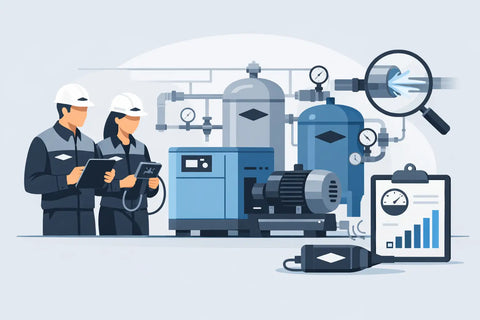
If your plant is adding a compressor to fix low pressure, there is a good chance the real problem is somewhere else. That is exactly why knowing how to audit compressed air system performance matters. A proper audit shows where air is being wasted, where pressure is being lost, and whether your equipment is matched to actual demand instead of assumptions.
Compressed air is one of the most expensive utilities in most facilities. It is also one of the easiest systems to overlook because it usually fails gradually. Pressure drift, rising energy bills, nuisance alarms, wet air, and frequent compressor cycling tend to show up long before a complete shutdown. An audit gives you a clear picture of what the system is doing now, not what it was designed to do years ago.
What a compressed air audit should tell you
A useful audit does more than confirm that compressors are running. It should answer a few operational questions that affect cost and uptime every day. Are you producing more air than the plant needs, or not enough at peak demand? Are pressure drops across filters, dryers, and piping forcing compressors to work harder? Are leaks, inappropriate uses, or poor controls driving unnecessary runtime? And just as important, is air quality meeting the requirements of your process?
The goal is not to create a report that sits on a desk. The goal is to identify corrective actions with a practical return, whether that means fixing leaks, resizing storage, adjusting controls, replacing treatment equipment, or reworking piping in a problem area.
Start with the right system baseline
Before you put meters on the system, gather the basics. Document compressor types, horsepower, control methods, rated flow, discharge pressure, dryer and filter configuration, receiver size, piping layout, and critical end uses. If you have more than one compressor, note which unit is intended as base load, trim, backup, or emergency coverage.
You also need operating context. Record production schedules, shift patterns, planned shutdowns, and any recent process changes. A plant that added a new packaging line or expanded a CNC area may have changed air demand substantially without updating compressor controls or distribution piping.
Utility bills are part of the baseline too. If energy cost has climbed faster than production, compressed air is a likely contributor. Maintenance history is another clue. Frequent filter changes, recurring condensate issues, overheating, and excessive service calls usually point to deeper system problems.
Measure what the system is actually doing
If you want to know how to audit compressed air system performance correctly, measurement is the difference between guesswork and useful data. At minimum, you want to track power, pressure, flow, and demand patterns over time. Spot readings can help, but logging is far more valuable because most compressed air problems are intermittent.
Start at the compressor room. Measure compressor discharge pressure, system header pressure, and pressure before and after treatment equipment. A large pressure drop across dryers or filters often means restricted flow, poor sizing, or overdue maintenance. Power data helps show whether compressors are running efficiently or spending too much time unloaded.
Flow measurement is where many audits become more accurate. Without flow data, it is difficult to distinguish a true capacity problem from a control problem or a leak problem. Demand logging over several days, and ideally across different shifts, will show base load demand, peak events, and whether demand is stable or highly variable.
If the facility has critical production zones, take pressure readings at the point of use as well. A plant may have adequate pressure in the compressor room and still be starving equipment on the far end of the building because of undersized piping, poor loop design, or localized restrictions.
Check for leaks and artificial demand
Leaks are often the first target in an audit because they are common, measurable, and expensive. In many facilities, leaks account for a significant share of compressed air consumption. The challenge is that they blend into normal operation until the system runs longer, pressure falls off, or an additional compressor gets added to keep up.
An ultrasonic leak survey is the most effective way to find them, especially during production when background noise is high. Focus on fittings, quick connects, hose assemblies, drains, valves, regulators, and older branch lines. Do not stop at identifying leak points. Estimate the cost of each leak based on pressure and runtime so repairs can be prioritized.
Artificial demand deserves equal attention. When system pressure is set higher than necessary, many end uses consume more air without improving performance. Blow-offs, open nozzles, venturi devices, and improperly regulated tools can drive demand far above what the process truly needs. Lowering pressure, changing nozzles, or replacing inappropriate uses with blowers or electric alternatives can produce meaningful savings.
Evaluate controls, sequencing, and storage
A compressed air system can have good equipment and still perform poorly because the controls are fighting each other. This is especially common in multi-compressor installations where each machine is operating from its own pressure band with little coordination. The result is excess unloaded running, unstable pressure, and inefficient compressor transitions.
Review how compressors are staged. Does one unit handle the base load while another trims demand efficiently, or are several machines partially loaded all day? Variable speed compressors can help in the right application, but they are not a cure-all. In a system with poor storage, bad pressure settings, or high pressure drop, even a modern machine can operate inefficiently.
Storage should also be part of the audit. Receiver capacity affects how well the system handles short bursts of demand and how stable pressure remains during load changes. If pressure swings are causing controls to overreact, adding or relocating storage may solve the issue more effectively than increasing compressor capacity.
Inspect air treatment and condensate management
Dryers, filters, separators, and drains are not side items. They directly affect pressure, air quality, and reliability. A clogged filter can create unnecessary pressure drop. An undersized dryer can allow moisture carryover during hot weather or peak demand. A failed drain can flood downstream equipment and contaminate air lines.
Audit each treatment component for differential pressure, sizing, service condition, and placement. Compare actual air quality needs to the process. A food or healthcare application may require a different treatment strategy than a general manufacturing line. On the other hand, some facilities overspend on treatment in low-risk areas while neglecting high-risk points of use.
Condensate management matters for compliance and equipment life. Check whether drains are operating as intended and whether oil-water separation equipment is sized and maintained properly. Water in the system is not just a quality issue. It also contributes to corrosion, valve failure, and product inconsistency.
Look at the distribution side, not just the compressor room
Many audits stop at the supply side. That misses a large share of performance problems. The piping network, point-of-use regulators, isolation valves, hoses, and drops all affect usable pressure and flow.
Look for long runs of undersized pipe, dead ends, excessive flexible hose, and branch layouts that create uneven pressure distribution. A well-designed loop system generally performs better than a layout that was expanded piecemeal over time. Pressure drop through the network should be low enough that production equipment gets the pressure it needs without forcing the whole plant to run at an inflated setpoint.
Walk the floor with operators and maintenance staff. They usually know where tools slow down, cylinders hesitate, or machines behave differently by shift. Those observations help connect data trends to real operating problems.
Turn findings into a ranked action plan
The final step in how to audit compressed air system performance is turning the data into decisions. Not every issue deserves the same priority. Rank findings by business impact: energy waste, downtime risk, product quality, maintenance burden, and payback period.
Some fixes are straightforward. Leak repair, filter replacement, drain repair, and pressure setpoint adjustment can often be done quickly. Others require planning, such as adding storage, changing controls, replacing dryers, or redesigning piping in a bottlenecked area. The right sequence depends on your plant. It rarely makes sense to buy new compressor capacity before fixing avoidable demand and distribution losses.
For facilities with uptime-critical operations, a professional audit often pays for itself by preventing the wrong capital decision. That is particularly true when the system has grown over time, includes multiple brands, or supports sensitive processes. A measured, system-level review gives maintenance and operations teams something they can act on with confidence.
The best audit is the one that leads to fewer surprises next quarter. If your system is costing more to run, showing pressure instability, or pushing equipment harder than it should, the numbers are already telling a story. The job is to capture them, read them correctly, and fix what matters first.
