
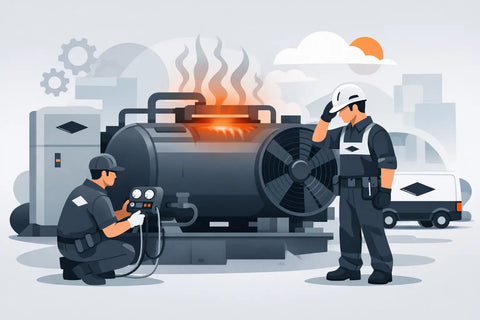
A compressor that runs hot rarely fails without warning. You usually see the signs first - rising discharge temperatures, nuisance shutdowns, reduced output, tripped safeties, or a machine room that feels hotter than normal. If you are asking why is my compressor overheating, the real issue is not just temperature. It is lost reliability, higher energy costs, and a growing risk of unplanned downtime.
Overheating is one of the most common symptoms in compressed air systems, but it is not a single diagnosis. It is the result of something upstream or around the machine going wrong. In some cases, the fix is simple, like clearing a blocked cooler or improving ventilation. In others, the compressor is reacting to a deeper mechanical or system-level problem that needs immediate attention.
Why is my compressor overheating in the first place?
Compressors generate heat by design. Air compression naturally raises temperature, and the machine depends on its cooling system, lubrication system, and operating environment to keep that heat under control. When one of those areas falls out of spec, temperatures rise quickly.
The most common cause is poor cooling airflow. Air-cooled compressors need clean coolers, unobstructed intake paths, and enough room around the package to reject heat. When dust, oil mist, or plant debris clog the cooler, heat stays trapped in the machine. A compressor room with poor ventilation can create the same result. If the ambient temperature is already high, the unit starts behind and has less capacity to shed heat.
On water-cooled machines, scaling, fouling, or restricted flow can reduce heat transfer. The compressor may appear to be operating normally until discharge temperatures begin climbing or the unit starts shutting down on high temperature alarms. In those situations, the compressor itself may not be the root problem. The cooling water circuit may be.
Lubrication issues are another major contributor. Low oil level, degraded lubricant, the wrong oil, or a restricted oil filter can all reduce the system's ability to carry heat away from critical components. On rotary screw compressors, oil does more than lubricate. It also helps cool and seal the airend. When oil quality breaks down, temperature control suffers fast.
Load profile matters too. A compressor that is oversized, undersized, short cycling, or running outside its intended duty can overheat even when nothing is mechanically broken. High demand, frequent starts, improper pressure settings, and poor system control can all push operating temperature in the wrong direction.
Common reasons a compressor overheats
In the field, overheating usually comes back to a short list of repeat problems. The challenge is that several can happen at once.
Dirty coolers and blocked airflow
This is one of the first things to check, especially in manufacturing environments with dust, fibers, overspray, or oil vapor. Coolers lose efficiency gradually, so the temperature rise may be easy to miss until the machine finally trips. Even a small layer of buildup can interfere with heat transfer enough to cause trouble during hot weather or peak production.
High ambient temperature
Compressor rooms are often treated as utility spaces, but heat buildup in the room directly affects machine performance. If hot discharge air recirculates back into the compressor intake, the unit is effectively trying to cool itself with already heated air. That is a losing battle. Summer conditions in Southern California and Arizona can turn a marginal ventilation setup into an immediate uptime problem.
Low or degraded lubricant
Oil that is old, contaminated, or incorrect for the application will not provide the same cooling performance as fresh lubricant that meets the manufacturer specification. Low oil level makes the issue worse. If the compressor has been topping off oil more often than normal, do not assume that is routine consumption. It may indicate a leak, carryover issue, or another developing fault.
Failed thermostatic valve or cooling component
If the thermostatic valve sticks, oil may not route through the cooler as intended. Cooling fans, fan motors, water control valves, and temperature sensors can also fail or drift out of range. These are the kinds of faults that can make a compressor overheat even though the room conditions and maintenance history look acceptable.
Restricted filters or ventilation paths
A dirty inlet filter can force the compressor to work harder. A plugged oil filter or separator can affect internal flow and temperature. So can blocked cabinet panels, collapsed ducting, or poor package ventilation. None of these issues should be treated as minor if the machine is already running hot.
Excessive system demand or pressure settings
When plant demand increases, the compressor has to do more work and reject more heat. If the system pressure has been raised over time to compensate for leaks or poor downstream performance, the compressor may be operating harder than necessary. That extra compression work shows up as extra temperature and extra power cost.
Warning signs you should not ignore
Some overheating events happen suddenly, but most build over time. Maintenance teams can often catch the issue before a shutdown if they know what to watch.
A steady rise in discharge temperature is the clearest indicator. Frequent high-temperature alarms, unexplained shutdowns, burnt-smelling lubricant, higher-than-normal room temperature, or a noticeable drop in compressed air performance also deserve attention. On lubricated compressors, dark or oxidized oil can point to sustained heat stress. If seals, hoses, or electrical components near the hot zone start aging faster than expected, excessive temperature may be part of the reason.
The trade-off is timing. Running the machine while monitoring temperatures may keep production moving for the moment, but it can also turn a manageable service call into a major repair. An overheated airend, damaged bearings, or repeated shutdown cycling costs much more than addressing the root cause early.
What to check before the problem gets worse
If your team is troubleshooting why is my compressor overheating, start with the basics before assuming major component failure.
Check the ambient conditions around the compressor. Look for poor room ventilation, blocked louvers, recirculating hot air, or intake air that is already too warm. Then inspect coolers, filters, and cabinet airflow paths for dirt or blockage. Verify oil level and review maintenance records to confirm the correct lubricant and service interval.
After that, review operating data. Compare current temperatures, pressure settings, run hours, and load profile to normal conditions. If the compressor has recently started running hotter during certain shifts, weather conditions, or production cycles, the pattern can help narrow the cause.
For water-cooled equipment, confirm flow rate, inlet water temperature, and heat exchanger condition. For air-cooled units, make sure fans are operating correctly and rotating as intended. If controls or sensors seem suspect, do not rely on appearance alone. A faulty reading can send a healthy machine into shutdown or hide a real temperature problem.
When overheating points to a bigger system issue
Sometimes the compressor is doing exactly what the system is forcing it to do. Chronic overheating can be a symptom of undersized equipment, poor compressor room design, neglected maintenance, piping restrictions, excessive pressure drop, or controls that are not matched to actual demand.
That is why isolated repairs do not always solve the problem for long. You can clean a cooler and get the machine back online, but if the room still traps heat or the plant keeps demanding more air than the package was selected for, the overheating will return. The right fix may involve ventilation improvements, control adjustments, capacity changes, or a broader system review.
For facilities with critical uptime requirements, this is where certified technicians add real value. The goal is not just resetting a high-temperature trip. It is identifying whether the failure started with maintenance, environment, controls, cooling, or application.
How to prevent compressor overheating
Prevention comes down to discipline. Keep coolers clean, use the correct lubricant, replace filters on schedule, and monitor temperature trends before alarms become shutdowns. Make sure the compressor room is designed for proper airflow and heat rejection, not just equipment storage.
It also helps to treat compressed air as a system rather than a standalone machine. Pressure settings, demand fluctuations, leaks, dryer performance, and piping layout all affect how hard the compressor has to work. Preventative maintenance is not just about extending service intervals. It is about protecting uptime and avoiding the kind of heat-related failures that disrupt production at the worst possible time.
If overheating has become a repeat problem, a deeper inspection is usually warranted. Advanced Air & Vacuum works with facilities that need more than a quick reset - they need the cause identified, corrected, and kept from coming back.
A hot compressor is never just a temperature problem for long. It is an operations problem, and the sooner you treat it that way, the easier it is to keep your system reliable.
