
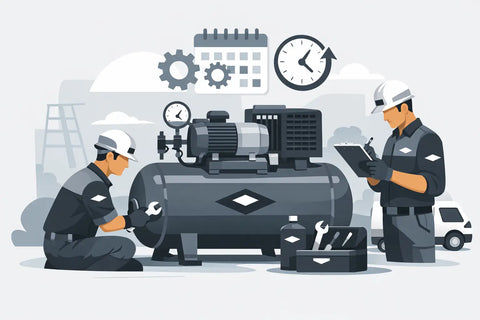
A compressor rarely fails at a convenient time. It usually goes down when production is tight, labor is scheduled, and every minute of lost air starts costing real money. If you're asking how often service air compressor equipment should be on the calendar, the short answer is this: more often than once a year, and not always on the same schedule for every machine.
The right maintenance interval depends on run hours, compressor type, air quality requirements, ambient conditions, and how critical compressed air is to your operation. A lightly used shop compressor and a plant-wide rotary screw unit serving multiple lines should not be maintained the same way. The safest approach is to build service intervals around operating conditions, then tighten that schedule when uptime matters more than squeezing extra hours out of consumables.
How often to service an air compressor depends on usage
For most industrial systems, service should be tied to operating hours first and the calendar second. Many manufacturers set routine maintenance checkpoints at roughly 500, 1,000, 2,000, 4,000, and 8,000 hours, depending on the component and machine design. That does not mean every service event is major, but it does mean a compressor should be inspected and maintained several times during the year if it runs daily.
A facility operating one shift, five days a week may hit service intervals at a manageable pace. A site running 24/7 can burn through those hours fast. That is where maintenance plans often break down. Teams think in months, but compressors wear in hours.
Calendar-based service still matters because idle time creates its own problems. Moisture buildup, degraded lubricants, clogged drains, and neglected filters can affect even systems that are not running around the clock. For that reason, quarterly reviews are a smart baseline for many facilities, even if major component service is scheduled by hour count.
A practical service schedule for most facilities
If you need a usable rule of thumb, start with three layers of maintenance: daily checks, routine scheduled service, and major interval service. Operators or maintenance staff should handle the first layer. Certified technicians should usually handle the second and third, especially on oil-flooded rotary screw systems, variable speed units, and any system tied to dryers, filtration, or critical air quality requirements.
Daily and weekly checks
These are fast but valuable. Check operating pressure and temperature, listen for changes in sound, inspect for leaks, verify condensate drains are working, and review controller alarms. On lubricated systems, oil level and oil condition should also be checked regularly. These small checks often catch the issues that turn into expensive downtime later.
Weekly or biweekly attention should include a more careful look at belts where applicable, coolers, intake filters, and the surrounding environment. Dust, high heat, and poor ventilation shorten service life quickly.
Every 500 to 1,000 hours
This is where many systems need their first true maintenance touchpoint. Depending on the compressor, that may include checking or replacing the air intake filter, inspecting separators, reviewing drain performance, checking electrical connections, and looking for pressure drop across filters and treatment equipment.
This interval is especially important in dirtier environments such as fabrication, food processing support areas, packaging, and plants with airborne particulates. A compressor in a clean mechanical room can often go longer than one pulling contaminated ambient air all day.
Every 2,000 to 4,000 hours
This range is common for oil and filter changes on many lubricated compressors, though the exact timing varies by manufacturer and lubricant type. Separator elements, line filters, dryer components, and other wear items may also need attention here. If the system includes refrigerated or desiccant dryers, service should be coordinated so the compressor room is treated as one operating system rather than separate pieces of equipment.
That matters because poor dryer performance can send moisture downstream, and overloaded filters can create pressure drop that forces the compressor to work harder. You may think the compressor is the problem when the real issue is neglected air treatment.
Every 8,000 hours and beyond
At this stage, service often becomes more comprehensive. Major inspections, fluid changes, separator replacement, valve inspections, motor checks, and controller review may all be on the table. In high-demand operations, this is also when it makes sense to evaluate overall system performance, not just the compressor itself.
If energy use has crept up, pressure has become unstable, or backup units are running more than expected, the service visit should go beyond routine parts replacement. It should identify whether the system is still operating the way it was designed.
What changes the answer
The question of how often to service an air compressor gets more nuanced when the operating environment is tough or the air demand is unforgiving.
Heat is a major factor. High ambient temperatures break down lubricants faster and reduce cooling efficiency. Dust and airborne debris load intake filters and foul coolers. Humidity increases condensate management demands and can stress dryers and drains. If your compressor room is hot, dirty, or poorly ventilated, standard intervals may already be too long.
Application matters just as much. A compressor feeding general shop air has different risk than one supporting medical systems, process equipment, packaging lines, laser cutting, or instrument air. In those settings, air quality and uptime carry more operational consequences. Preventative maintenance should be tighter because failure costs are higher.
Machine type also changes the service rhythm. Reciprocating compressors often need more frequent inspection of valves, rings, and belts. Rotary screw compressors usually support longer run cycles but still depend heavily on timely fluid, filter, and separator service. Oil-free systems remove one maintenance variable but introduce others, often with stricter requirements for specialized components and performance verification.
Signs your compressor needs service sooner
A maintenance interval is a starting point, not a guarantee. Some units need attention early, and most facilities see warning signs before a true failure.
If discharge temperatures rise, pressure becomes inconsistent, drains stop clearing condensate, energy costs increase without a production change, or downstream equipment starts seeing moisture or contamination, the system should be inspected. The same goes for unusual vibration, noise, oil carryover, frequent cycling, or alarms that operators keep resetting without investigation.
Air leaks are another overlooked trigger. A leaking system does not just waste compressed air. It drives longer run times and more load-unload cycling, which increases wear and pulls maintenance events closer together. In many plants, the compressor is serviced on schedule, but the air system around it is not. That gap leads to avoidable cost.
Why waiting too long gets expensive
Stretching service intervals can look efficient on paper. In practice, it usually shifts cost from planned maintenance to unplanned downtime, emergency labor, damaged components, and higher energy consumption.
A dirty filter raises pressure drop. A neglected separator affects performance. Old lubricant loses protective properties. A failed drain sends water downstream. None of these issues stay isolated for long. Compressors are interconnected with dryers, filters, controls, piping, and end-use equipment, so one neglected service item can ripple through the entire system.
That is why preventative maintenance is usually less about replacing parts and more about protecting uptime. For facilities where compressed air supports production, maintenance is an operational control, not just a mechanical task.
How to build the right service plan
Start with the manufacturer recommendations, then adjust for your actual duty cycle and environment. Track run hours, not just dates. Review alarm history, pressure trends, energy performance, and the condition of downstream treatment equipment. If you have multiple compressors, coordinate maintenance so one overdue machine does not force the rest of the system to carry the load unsafely.
For many operations, the best option is a scheduled maintenance program with defined inspections, consumable replacement intervals, and technician oversight. That creates consistency and makes it easier to budget labor, parts, and planned downtime. It also reduces the common problem of one critical service item getting missed because everyone assumed someone else handled it.
If your team is managing aging equipment, mixed brands, or a system that has grown over time, outside support can add real value. A service partner that understands compressors, dryers, filtration, controls, and piping can spot system-level issues early. That is often where the biggest savings are hiding.
Advanced Air & Vacuum works with facilities that cannot afford guesswork around compressed air reliability. Whether the need is routine maintenance, emergency repair, or a more structured service plan, the goal is the same: keep air available, clean, and cost-effective.
A good rule is simple. Service your compressor before it asks for attention, not after production pays the price.
